BAH: How It Works, What Changed, and How to Make It Work for You
Basic Allowance for Housing is one of the most valuable tools in your pay package — and one of the most misunderstood. Whether you’re a specialist trying to figure out if you can afford to live off-post, an NCO planning a PCS, or a dual-military couple sorting out who gets what, this article breaks it down so you don’t have to learn it the hard way through your S1.
BAH is a tax-free monthly allowance that covers roughly 95% of local housing costs. Your rate is set by your duty station ZIP code, pay grade, and dependent status — not by what you actually pay in rent. In 2026, BAH increased an average of 4.2% nationwide. You keep any difference if you live under your rate. Rate protection prevents your BAH from dropping as long as your status doesn’t change. The DA Form 5960 is the form that makes all of it official — if you don’t submit it, nothing moves. Soldiers at high-cost duty stations may also be entitled to a COLA supplement on top of BAH.
What BAH Actually Is
BAH — Basic Allowance for Housing — is a non-taxable monthly payment for service members who don’t live in government-provided quarters. Its purpose is simple: offset the cost of renting or owning a home in the civilian market near your duty station.
The Department of Defense calculates BAH using median rental costs and average utility expenses for each of 299 Military Housing Areas (MHAs) across CONUS, Alaska, and Hawaii. The rates are based on what civilians with comparable income levels pay for housing in each area — not on what you personally choose to rent.
Three factors determine your BAH rate:
- Duty station — the ZIP code of your installation, not where you live
- Pay grade — E-4 and E-5 get different rates; so do O-1 and O-3
- Dependent status — with dependents (spouse, child) vs. without
That’s it. BAH doesn’t care if your apartment costs $200 less than your rate or $300 more. Your allowance is fixed.
DA Form 5960: The Form That Controls Your BAH
Everything in this article — starting BAH, changing it, stopping it — runs through one document: DA Form 5960, BAH Authorization and Dependency Declaration. Most Soldiers encounter it at in-processing and never think about it again. That’s a mistake.
The 5960 is how you officially start, adjust, or terminate your BAH entitlement. It’s also how you declare your dependents — and that declaration carries legal weight. The form states clearly that making a false claim against the U.S. Government is punishable by courts-martial, with a maximum fine of $10,000 or five years imprisonment, or both. This isn’t a form you fill out casually. Download the current version from the Army Publishing Directorate (APD) — do not use an outdated copy from a random source.
Key things every Soldier needs to know about the DA 5960:
- You must recertify at every PCS in-processing — regardless of whether your dependent status changed. This is not optional.
- Both you and your commander must sign it — the form is not valid without both signatures.
- Any life change requires a new 5960 — marriage, divorce, birth of a child, dependent aging off, legal separation. Submit it to your S1 immediately, not at your next annual review.
- Annual recertification is required — the 5960 is part of your Annual Personnel and Financial Record Review alongside DD Form 93 and SGLV. It must be current in iPERMS.
- Keep a copy — submit the original to your S1/Finance, retain a copy for your personal records.
The 5960 Covers Support, Not Just Status
If you’re receiving with-dependent BAH, the 5960 requires you to certify that you’re providing adequate financial support to those dependents. If you’re separated or divorced and receiving BAH based on a dependent, you must be paying at least the BAH-DIFF rate in support — or your entitlement can be recouped. The Army does collect on this.
2026 Rates: What Changed
BAH increased an average of 4.2% in 2026, effective January 1. That’s lower than the consecutive 5.4% increases in 2024 and 2025, and well below the 12.1% jump in 2023 when housing costs spiked nationally. The DoD projects approximately $29.9 billion in total BAH payments for 2026 across roughly one million service members.
The 4.2% is a national average — your actual increase depends on where you’re stationed. High-cost markets like the Pacific Northwest, Hawaii, and the DC metro area often see larger dollar increases. Some stabilizing markets may see flat or minimal changes for new arrivals.
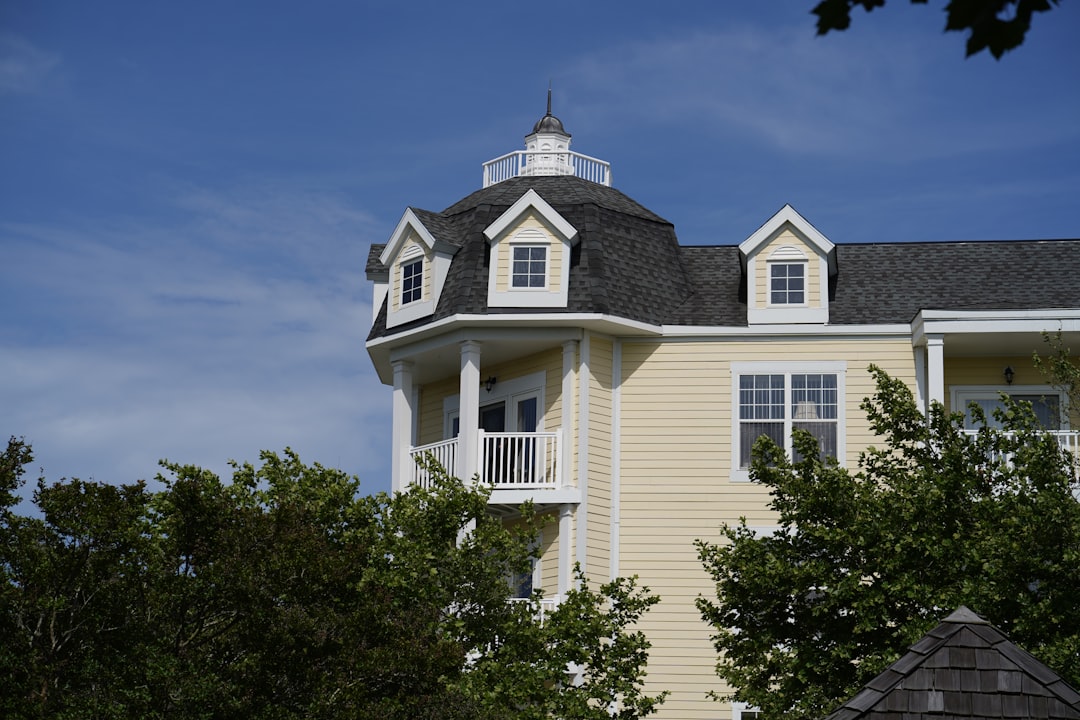
Your BAH rate is set by local housing market data — not the type of housing you choose.
| Year | Avg BAH Increase | Notes |
|---|---|---|
| 2023 | +12.1% | Post-pandemic housing surge |
| 2024 | +5.4% | Sustained market pressure |
| 2025 | +5.4% | BAH up 5.4%; E-1–E-4 also received separate +10% basic pay boost in April |
| 2026 | +4.2% | Stabilizing, still above historical norm |
Source: Military.com BAH Guide; DTMO BAH Overview.
Rate Protection: Your BAH Cannot Go Down
This is the rule most Soldiers don’t know until they need it. If BAH rates drop in your area, you are grandfathered into your current higher rate — as long as three things stay the same:
- You remain at the same duty station
- Your pay grade doesn’t decrease
- Your dependency status doesn’t change
If any of those change — PCS, promotion, marriage, divorce, a dependent aging off — your BAH recalculates to the current rate for your new situation. Rate protection applies to individuals, not situations.
The 5% Out-of-Pocket Rule
By law, BAH is designed to cover 95% of typical housing costs for your grade and location. You’re expected to cover the remaining 5% — roughly $93 to $212 per month depending on grade and dependent status. If you find housing below your BAH rate, you keep the difference. There’s no clawback.
BAH Isn’t the Only Housing-Related Supplement: COLA
BAH covers housing costs. But at some duty stations, the overall cost of living — groceries, transportation, utilities — is so high that BAH alone doesn’t close the gap. That’s where Cost of Living Allowances come in. There are two separate programs, and they’re commonly confused.
CONUS COLA — High-Cost Areas in the Continental U.S.
CONUS COLA is a taxable supplemental allowance for Soldiers stationed in high-cost areas within the continental United States where non-housing costs exceed the national average by at least 8%. It’s calculated based on your duty station ZIP code, pay grade, years of service, and dependent status — and it can change or disappear when those factors change.
In 2026, approximately 127,000 service members are eligible for some level of CONUS COLA. Eligible areas have historically concentrated in California, New York, and Massachusetts, though eligibility shifts annually. Some Soldiers lost CONUS COLA entirely on January 1, 2026 with no phase-out — it showed up as an immediate pay cut on their LES. If you’re in a high-cost CONUS area, verify your eligibility every year, especially after a PCS.
Important: CONUS COLA is taxable, unlike BAH. Budget using the post-tax figure, not the gross amount.
OCONUS COLA — Alaska, Hawaii, and Overseas
OCONUS COLA is the non-taxable equivalent for Soldiers stationed outside the continental United States — Alaska, Hawaii, Guam, and overseas locations. Unlike CONUS COLA, it’s tax-free, and it can fluctuate throughout the year as local prices and exchange rates shift. If you’re headed to Alaska or Hawaii, don’t assume your BAH alone reflects the full cost picture — OCONUS COLA can be a meaningful supplement, especially for senior NCOs with dependents.
CONUS COLA: DTMO CONUS COLA Rate Lookup — enter your duty station ZIP, pay grade, years of service, and dependent status.
OCONUS COLA: DTMO Overseas COLA Rate Lookup — enter your overseas duty station. Rates update periodically throughout the year, so check on arrival and again mid-tour.
Both tools are on the official Defense Travel Management Office site. Cross-reference what you find against your LES.
How BAH Works at PCS
When you PCS, your BAH shifts to the rate for your new duty station on your report date — not your old station, not the date your orders were cut. Plan accordingly.
At in-processing, you will be required to recertify your BAH entitlement via DA Form 5960 regardless of whether anything changed. Have your supporting documents ready: orders, marriage certificate if applicable, and dependent documentation. Don’t show up to finance without them.
Rates vary significantly — an E-5 with dependents at a rural installation can see several hundred dollars less per month than the same grade at a high-cost urban duty station. Use the DTMO BAH Rate Lookup and plug in the gaining station’s ZIP before you commit to anything.
Dual Military BAH: Who Gets What
If both you and your spouse are active duty, here’s how it works:
- No dependents: Each Soldier receives BAH at the without-dependent rate for their respective duty station.
- With dependent children: One Soldier receives with-dependent BAH (typically the higher-ranking member). The other receives without-dependent BAH. You cannot both draw with-dependent rates.
- Stationed apart: The member with whom the dependents reside gets the with-dependent rate. The other gets without-dependent at their location.
This is one of the most commonly misunderstood pay situations. Both Soldiers will need to submit DA Form 5960s reflecting their respective entitlements. If your S1 isn’t getting it right, escalate to finance with your marriage certificate and dependent documentation.
BAH Partial: The One Most Soldiers Forget
If you’re a single Soldier living in barracks (government quarters), you don’t get full BAH — but you may receive BAH Partial, a flat daily rate designed to offset incidental housing costs. This is significantly less than regular BAH and is often overlooked on LES reviews. Check your LES if you’re living in the barracks and aren’t sure whether you’re receiving it.
The BOLO List
Always look up your BAH rate for the gaining installation before you sign anything. Soldiers who assume their current rate carries over to a new duty station get burned at PCS. Use the DTMO BAH Rate Lookup — it takes two minutes and can save you hundreds a month.
Got married last month and haven’t updated your records? Had a baby and didn’t submit a new DA Form 5960? Your BAH doesn’t change until the paperwork does — and if the Army overpays you because your status changed and you didn’t report it, they will recoup every dollar. Download the current 5960 from Army Pubs, update IPPS-A, and get it to your S1 within 30 days of any dependency change.
Your 3 Action Items
- Look up your current rate — Go to the DTMO BAH Rate Lookup, enter your duty station ZIP, pay grade, and dependent status. Verify it matches your LES. Then check the CONUS or OCONUS COLA lookup — if you’re entitled to a supplement and it’s not on your LES, get to finance.
- Check your DA Form 5960 status — When did you last submit one? If you’ve had a life change — marriage, divorce, new dependent, PCS — and haven’t filed a new 5960, get to your S1 this week. Pull the current form from Army Pubs and check your iPERMS record to confirm your last recertification date.
- PCSing in 2026? Build your full pay picture before you arrive — Look up BAH at the gaining station ZIP, check CONUS or OCONUS COLA eligibility, gather your supporting documents for in-processing finance, and have your 5960 ready to sign on day one. Don’t wait until you’re standing in the finance line.
Got questions about BAH, COLA, DA Form 5960, or a PCS housing situation that isn’t adding up? Post it in the Personnel & Admin forum — that’s what the formation is for.